 PlumbingWaukee
Home / Brands / Watts Water / Pfister
Watts Water / Pfister Repair and Installation in Central Iowa
Trusted Watts Water / Pfister repair, installation and maintenance for homes and businesses. Call for same day help and clear pricing.
Call +1 (515) 585-4137Free Estimate- Free on-site estimates
- Same-day available
- Price before work starts
- Clean, careful crew
- Homes and businesses
Watts Valves and Pfister Faucets in Waukee Homes

Watts and Pfister do very different jobs, but both matter in a healthy plumbing system. Watts is known for the hidden hardware: pressure reducing valves, shutoff valves, backflow preventers, and other parts that sit in the walls, the basement, and the water main. Pfister makes faucets, showerheads, and bath and kitchen fixtures that you see and touch every day.
We are an independent plumber. We are not affiliated with Watts or Pfister and do not represent either company. We replace and install their products as part of normal plumbing work in Waukee, Urbandale, Clive, and the area around them. Call +1 (515) 585-4137 if you want help.
Think about the valves first. Your home gets water from a city main or a private well at a certain pressure. That pressure can be too high for household pipes and fixtures. A pressure reducing valve, often called a PRV, sits near where the main line enters the house. It lowers the incoming pressure to a safe, steady level. It is quiet and works for years, so many people forget it is there until something goes wrong.
Shutoff valves are the other quiet heroes. These are the small handles under sinks, behind toilets, and at the water heater. When a pipe or a fixture fails, a good shutoff lets you stop the water at once. A seized valve can turn a small leak into a big mess.
Common Watts and Pfister Problems We Fix
- High water pressure that strains fixtures and pipes.
- Hammering or banging pipes when a tap shuts.
- Leaking or seized shutoff valves.
- A failed pressure reducing valve.
- A dripping Pfister faucet or a stiff handle.
- Low flow from a clogged faucet aerator.
High Pressure and Pipe Hammering
Pressure that is too high is a quiet threat. You may notice a spray that feels harsh, a toilet that keeps refilling, or a relief valve on the water heater that drips. Over time, high pressure wears out washers, cartridges, and appliance hoses. It can also cause loud banging, called water hammer, when a valve shuts fast and the moving water slams to a stop.
We start by testing the pressure with a gauge on an outdoor spigot or a laundry connection. If it is high, we check the PRV. These valves have a spring and a diaphragm that wear out. When they fail, pressure can creep up. We replace the valve and set it to a steady level. If banging continues, we may add an arrester or secure loose pipes. See our repiping page if old, noisy lines are part of the story.
Leaking and Stuck Shutoff Valves
Older shutoff valves can drip at the stem or refuse to turn. A valve that has not moved in years often gets crusted with minerals. Forcing it can snap the stem and start a leak. The safest fix is to replace the valve with a quality part, often a quarter-turn ball valve that is easier to use and less likely to seize.
We shut off the water at the main, drain the line, and swap the valve. Then we test it for leaks and make sure it opens and closes smoothly. If a hidden drip has been going for a while, we look for water damage nearby. Our guide to finding a hidden water leak tells you what to check yourself.
Choosing the Right Valve or Faucet
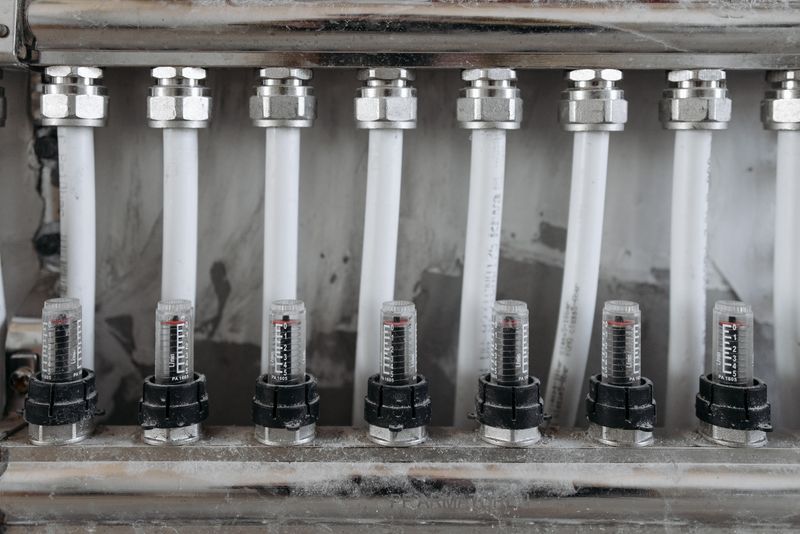
Use the right valve for the job. A pressure reducing valve is not a shutoff. A shutoff is not a backflow preventer. Each has its own purpose, and mixing them up can cause trouble. We pick the valve based on the line size, the pressure, the water use, and local code. If you are not sure what you have, we can identify it.
A backflow preventer is one more useful part. It stops dirty water from flowing the wrong way into your clean supply. You may need one on a lawn sprinkler system or a hose connection. In Iowa, irrigation lines are common in newer Waukee neighborhoods, so this is worth asking about before spring start-up.
Think about your expansion tank, too. When a home has a PRV, the water system becomes closed, and heated water has nowhere to go. An expansion tank near the water heater absorbs that extra pressure. Without one, the relief valve may drip and fixtures may wear faster. Ask us if you have a PRV and no tank. Our Rheem page also touches on this.
For a Pfister faucet, match the fixture to your sink holes and your needs. Count the holes and measure the space. Think about a pull-down spray in the kitchen or a simple handle in the bath. Check that replacement cartridges are easy to find so the faucet is easy to keep up.
How We Install and Repair
We look at the system as a whole. For a pressure problem, we test, then check the PRV, the water heater, and the fixtures. For a faucet, we check the cartridge, the supply lines, and the shutoffs. You get a clear price before we begin, and nothing starts until you agree.
For a PRV job, we shut off the water at the main and drain the pipes. We cut out the old valve, fit the new one with unions or proper fittings, and set the pressure. We refill slowly, bleed air out of the lines, and check for leaks. We test the pressure again at a spigot to confirm it is steady.
For a faucet, we shut off the stops, remove the old fixture, and clean the mounting surface. We install the new faucet, connect the lines, and test hot and cold. If the stops are old, we replace them in the same visit. For similar fixtures, see Delta, Moen, and Grohe.
Signs Worth Acting On
- High water pressure, or a harsh spray from every tap.
- Hammering or knocking in the pipes.
- A valve that will not turn, or drips at the handle.
- A dripping faucet or a stiff handle.
- A water heater relief valve that drips on its own.
These signs often show up before something bursts. High pressure can crack a supply hose behind a washer or inside a wall. A stuck valve may leave you unable to stop water when you need to. If a leak is flowing, shut the main and call us right away. Our emergency plumber tips can guide you.
Care Tips for Valves and Faucets
Test your pressure reducing valve once a year. A cheap gauge screws onto an outdoor spigot and reads your pressure. Many homes do well in a moderate range. If the reading is much higher than that, or it climbs at night when no one is using water, the valve may be failing.
Exercise your shutoff valves. Turn each one a quarter turn and back about twice a year. That keeps them from seizing. Do this gently. If a valve feels stuck or leaks when moved, do not force it. Call us to replace it before it breaks.
For Pfister faucets, replace cartridges when drips appear. Clean aerators every few months. Wipe the finish with mild soap. In Iowa, hard water leaves scale on every part. A softener helps the whole system last longer. If you are on a private well, such as near Van Meter or Adel, sand and sediment can wear parts faster, so check filters and screens often.
In winter, shutoffs for outdoor faucets matter. Close and drain them before freezing weather. A burst outdoor line can flood a wall. See our article on how to prevent frozen pipes for a full list.
Repair or Replace?
Repair makes sense when a valve or faucet has a single worn part. A new cartridge or a new seal can make a faucet like new. Replace a valve when it is corroded, leaking at the body, or too stiff to move. Replace a PRV when it can no longer hold pressure steady, or when it has run for many years and shows signs of wear.
The cost depends on the part, the pipe size, and how much work it takes to reach it. A valve under a sink is easy. A main line valve in a tight basement takes longer. We explain what we find and give you a clear price. We do not guess at numbers before we see the job.
Check your paperwork. Many faucets and valves come with a limited warranty, and the terms vary by product. Keep your receipt and any installation record. If you are not sure what is covered, ask the maker, and we can document what we find. Your home insurance may also care about proper pressure and good valves, since leaks cause costly damage.
Related Help in Waukee
Hidden leaks and old pipes often go hand in hand with pressure problems. Learn how our leak detection team finds them, or see how commercial and residential plumbing work fits your property. You can also check other brands we service or reach out to book a visit.
Tip: Know where your main shutoff is. Walk to it today and make sure the handle turns.
Questions We Hear Most
Do you service Watts Water / Pfister?
Yes. We repair and install Watts Water / Pfister products and can advise on a good model for your home. We are an independent plumber and not tied to either brand.
How do I know if my water pressure is too high?
Use a gauge on an outdoor spigot. A harsh spray, banging pipes, or a dripping water heater valve are also signs. We can test it for you.
How often should a pressure reducing valve be replaced?
There is no fixed date. They wear over time, so test pressure yearly. When it drifts or will not hold, replace it.
Why will my shutoff valve not turn?
Minerals can lock the stem in place after years of no use. Do not force it. We can replace it with a smooth quarter-turn valve.
Do I need an expansion tank with a PRV?
Often, yes. A PRV can make the system closed, so extra pressure from heated water needs somewhere to go. We can check your setup.
Ready for Help?
Call now for friendly service and honest pricing.
Call +1 (515) 585-4137Request Service